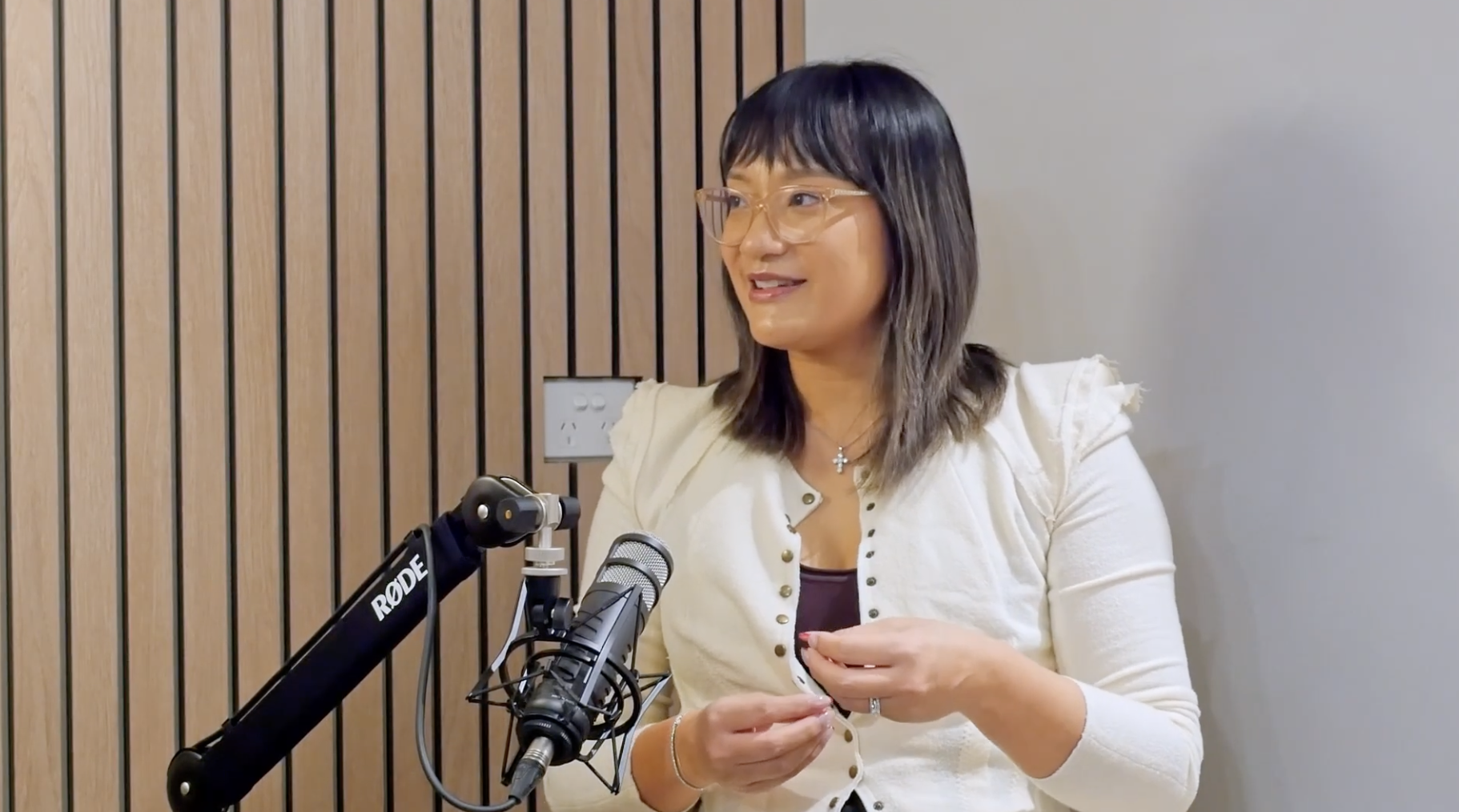
Building a Grassroots Movement: Lessons from a Political Campaign Applied to Business Marketing

How we built Sally Capp's grassroots political movement using digital marketing principles that work for any business seeking authentic growth.

How building a grassroots political movement taught me everything about authentic digital marketing

The Full Circle Moment

Walking into a sold-out IABC Victoria event earlier this month felt surreal.

Last October, I shared the stage at the Deb Ganderton Oration with Sally Capp AO, Ben Hart, and Rebecca Skelton - unpacking her journey from candidate to two-term Lord Mayor of Melbourne. That conversation resonated so deeply that IABC Victoria invited us back.

This time? A different panel. Different focus. Same lessons that keep proving themselves true.

30+ people on the waitlist. A room buzzing with questions about building movements, developing leadership brands, and implementing bold promises.

Not gonna lie, it felt good.

But more than that? It reminded me that the framework we used to elect an independent Lord Mayor works far beyond politics.

The Journey: From Corporate Comms to Campaign War Room

2017: Zero political experience

Before working on Sally Capp's Lord Mayor campaign, my background was corporate communications, retail, and stakeholder management. I'd worked at the Committee for Melbourne and Cancer Council of Victoria and built an online retail business.

Political campaigns? Not even on my radar.

When I joined Sally's executive campaign team as Digital Marketing Manager, I had no idea how campaigns "should" work. No established playbook. No insider knowledge.

Turns out, that was exactly what we needed.

2018: Building a movement from scratch

We had no party machine backing us. No establishment support. Just an authentic leader willing to show up as herself, and a digital strategy that prioritised genuine connection over political polish.

The approach was simple: when politicians zig, we zag.

While others polished their messaging and played it safe, Sally shared her cancer journey. She wore an Ewok costume to an early morning radio interview. She took the tram instead of the mayoral car.

And we amplified every authentic moment through strategic digital marketing.

2024: The proof of concept

By the re-election campaign during COVID lockdowns, when physical campaigning stopped entirely, the digital community we'd built over six years sustained the entire movement.

That's when you know you've built something real - when it survives without you constantly pushing it.

What the Panel Explored: Three Critical Questions for Communicators

This month's IABC Victoria session - the first for the year - tackled three challenges every communications leader wrestles with:

  1. How do you use social media to build an actual movement (not just engagement metrics)?
  2. How do you help leaders find their voice and build confidence in using it?
  3. How do you implement big promises after the campaign?

Alongside Ben Hart and Rebecca Skelton, we unpacked the strategies, mistakes, and lessons from building Sally Capp's grassroots movement from zero to two-term Lord Mayor of Melbourne at the City of Melbourne.
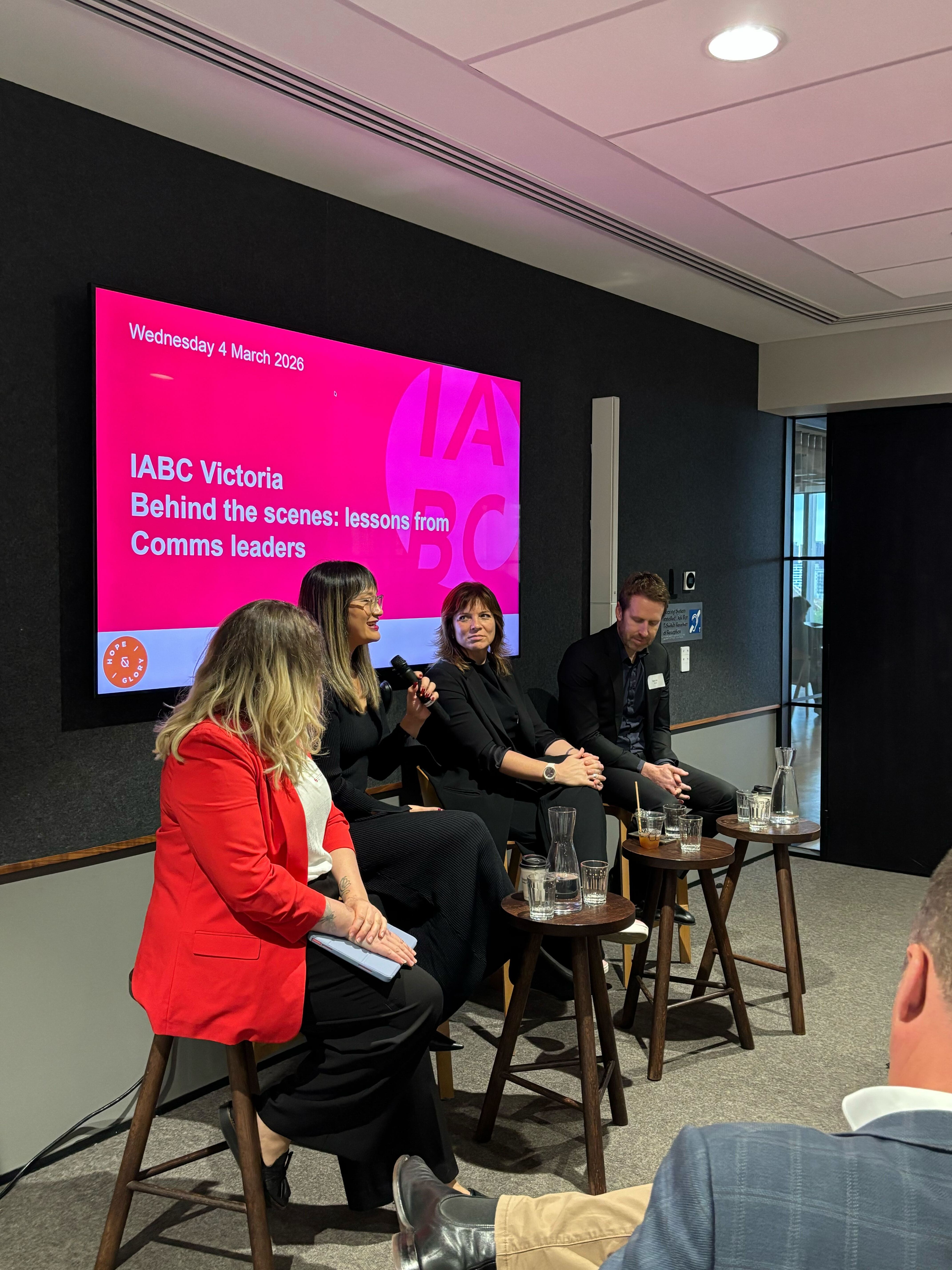
Image supplied: IABC Victoria

Four Lessons That Apply Far Beyond Politics

1. Your "Lack of Experience" Can Be Your Competitive Advantage

The corporate skills that transferred:

  • Customer journey mapping → Voter journey mapping
  • Stakeholder management → Coalition building
  • Retail brand positioning → Political brand positioning
  • Content strategy for e-commerce → Content strategy for policy

The advantage of not knowing "the rules":

When you're not constrained by "how it's always been done," you bring fresh thinking that actually cuts through.

I approached Sally's campaign like I'd approach building a retail brand:

  • Who's the customer (voter)?
  • What's their journey to purchase (vote)?
  • How do we build trust over time?
  • What makes us genuinely different?

Political operatives would've told me that's not how campaigns work. Good thing I didn't know any political operatives.

For business leaders and marketers:

Don't apologise for being new to a sector. Your outside perspective is valuable. Ask "why do we do it this way?" when everyone else just accepts it.

Your corporate communications skills transfer better than you think. You just need to translate the context.

2. Speed + Patience: The Compound Growth Formula

Speed creates opportunity

Sally Capp was an early adopter of authentic digital leadership - like Jacinda Ardern before her.

While other Australian politicians were still debating whether Instagram was "appropriate" for public office, we were already building community there.

Being early gave us:

  • Space to experiment without intense scrutiny
  • Time to find what resonated before competitors caught on
  • First-mover advantage in a crowded political landscape

Patience compounds opportunity

But here's where most organisations get it wrong: they move fast, find something that works, then jump to the next shiny tactic.

We found our approach in the first campaign, then committed to it for six years.

The execution:

  • 4-6 social media posts per week
  • Every week
  • For six years
  • No breaks, no "quiet periods," no "we'll pick it back up after..."

That consistency built compound trust. By the time COVID hit and we needed that trust bank? It was already there.

For your business:

Get moving fast to generate opportunities and test what works. But once you find it, commit for years, not quarters.

Consistency + Time = TrustTrust = Top of Mind
Top of Mind = Conversion (when they're ready)

3. Trust Follows Consistency, Not Perfection

The pattern is the proof

The business that delivers a quality product every time earns customer trust.

The person in a relationship who shows up reliably - who keeps promises, who responds with steadiness - earns the trust of the other.

The brand that posts consistently, shares valuable insights, and maintains presence earns audience trust.

We weren't perfect. We were present.

Not every post was brilliant. Not every campaign moment was flawless. But we showed up.

4-6 times per week. With authentic updates, policy explanations, community moments, behind-the-scenes glimpses.

The compound effect:

By year three, we had a community that echoed our messaging without prompting.

By year five, diaspora communities in Hong Kong and Europe were organising their own voting campaigns.

By year six, when COVID locked us in our homes, the digital community sustained the entire re-election campaign.

For communicators and marketers:

Stop optimising for perfection. Start optimising for presence.

Pick a cadence you can sustain for 12 months minimum. Show up at that rhythm. Trust the compound effect.

Your audience would rather have consistent value than occasional brilliance.

4. Digital Amplifies Authenticity. It Doesn't Create It.

The critical distinction

This is where most organisations get digital marketing backwards.

They think: "We need to be on social media, so let's create a persona that works for social media."

Wrong approach.

What actually works:

Sally's authentic leadership created the movement. Digital made it visible, measurable, and scalable.

We didn't manufacture grassroots energy through paid advertising. We identified what was authentically resonating, then built digital infrastructure to amplify it.

The proof it was real:

When people take ownership of your message and spread it without being asked - that's your signal.

We knew we'd crossed from campaign to movement when:

  • Community members called Sally "a breath of fresh air" (language we'd never scripted)
  • Overseas voters organised themselves without our coordination
  • During COVID, the community sustained momentum without physical events
  • A communications professional told us we'd "set a new standard" for political digital in Melbourne

The infrastructure that scaled authenticity:

  • Organic content: Showed who Sally genuinely was
  • Paid advertising (LinkedIn + Meta): Found the right audiences
  • Email marketing: Sustained engagement between big moments
  • Chinese language marketing: Expanded to new communities authentically
  • Consistent cadence: Made her top-of-mind over time

For your organisation:

If your leadership, brand, or offering isn't authentically differentiated, digital will expose that faster than anything.

But if it IS real? Digital becomes your force multiplier.

Audit your authenticity first. Then build the infrastructure to amplify it.

From Politics to Business: The Transferable Framework

The fundamentals don't change:

Whether you're running a political campaign, launching a product, building a personal brand, or growing a professional services firm:\

✓ Differentiation matters (when your industry zigs, you zag)
✓ Consistency compounds trust over time
✓ Early adoption creates competitive advantage
✓ Authenticity scales, manufactured personas don't
✓ Digital amplifies what's real, it doesn't create what's fake

The application for Melbourne businesses:

If you're a professional services firm, lifestyle brand, or B2B company trying to build trust in a crowded market:

  1. Identify your authentic differentiation (not what you think you should say - what's genuinely different about how you operate)
  2. Build digital infrastructure to amplify it (website, content strategy, email marketing, social presence)
  3. Commit to consistent presence (pick a sustainable cadence and stick to it for 12+ months)
  4. Measure what matters (community advocacy, unprompted sharing, sustained engagement - not just vanity metrics)

This is exactly what we do at Mulberry Marketing for our clients across professional services and lifestyle brands.

The Questions That Came Up (And How We Answered Them)

"How do you work with leaders who are reticent to have a visible brand presence?"

My answer:

The risk isn't being visible. The risk is being silent while others define you.

In a world of misinformation and polarisation, if you're not telling your story, someone else will. And they won't get it right.

The reframe I use with reticent leaders:

Visible leadership doesn't mean:

  • Posting constantly
  • Chasing viral moments
  • Engaging in every controversy
  • Being on every platform

It means:

  • Showing up consistently (not constantly)
  • Sharing your expertise and values
  • Being findable when people look for you
  • Building trust before you need it

The control argument:

Having a visible presence gives you MORE control over your narrative, not less. You're shaping the conversation rather than reacting to it.

Sally built trust over six years through consistent, authentic presence. When COVID hit, and she needed that trust bank? It was already there.

Leaders who avoid visibility? They're starting from zero trust when they can least afford it.

"How do you prove ROI on trust-building when leadership wants quarterly metrics?"

The honest answer:

You can't prove ROI on trust in one quarter. That's not how trust works.

But you CAN show leading indicators:

Metrics that matter for trust-building:

  • Engagement quality (not just quantity - are people having real conversations?)
  • Message recall (are people using your language unprompted?)
  • Organic advocacy (are customers/community sharing without being asked?)
  • Sustained reach (is your audience growing steadily, not in spikes?)
  • Direct attribution (are people saying "I follow you on LinkedIn" in sales conversations?)

The education conversation:

We had to educate stakeholders that viral moments create spikes, not movements.

Consistent presence creates compound growth that looks boring month-to-month but transformative year-over-year.

Show them the 12-month trend, not the monthly variance.

"What if we don't have six years to build trust?"

The reality check:

You don't get to choose your timeline for trust. Your audience does.

But you CAN accelerate trust-building by:

  1. Being early to platforms/tactics your competitors haven't adopted yet (like Sally with authentic digital in 2017)
  2. Increasing frequency while maintaining quality (we went from 3 posts/week to 4-6 as capacity allowed)
  3. Leveraging paid to amplify organic authenticity (don't choose between paid and organic - use both strategically)
  4. Creating shareable moments that reveal authentic values (Sally's Ewok costume, tram-riding, cancer story sharing)

The compound curve:

Trust-building looks like this:

  • Months 1-3: Feels like you're shouting into the void
  • Months 4-6: Small signs of engagement
  • Months 7-12: Noticeable momentum
  • Year 2: Compound effects become visible
  • Year 3+: Movement energy takes over

Most organisations quit at month 6. The ones who win commit to year 3.

What's Next: Applying These Lessons at Mulberry Marketing

These IABC Victoria panels - from the Deb Ganderton Oration in October to this month's session - reminded me why I started Mulberry Marketing nearly 10 years ago.

The mission hasn't changed:

Help Australian businesses, particularly professional services firms and lifestyle brands, build authentic marketing that compounds over time.

What HAS changed:

The proof of concept is undeniable.

The framework that built a grassroots political movement works for:

  • Law firms building thought leadership
  • Lifestyle brands entering new markets
  • Professional services firms differentiating in crowded spaces
  • Founders building personal brands that open doors

The Mulberry approach:

We don't chase marketing fads or vanity metrics.

We build:

✓ Authentic differentiation (finding what's genuinely different about how you operate)
✓ Consistent digital presence (sustainable cadence that builds compound trust)
✓ Strategic amplification (paid + organic working together)
✓ Long-term relationships (clients stay with us for years because the results compound)

Our distinctive specialisation:

Just like Sally's campaign succeeded by reaching diverse communities authentically, Mulberry Marketing is one of few Australian agencies with genuine Chinese marketing capability (WeChat, Little Red Book/Xiaohongshu, Douyin, Weibo).

We help Australian brands reach Chinese-speaking audiences with cultural authenticity - not just translation, but genuine connection.

Key Takeaways: Your Action Plan

If you take nothing else from this post, remember:

  1. Move fast to find what works, then commit for years
    • Early adoption creates opportunity
    • Patience compounds that opportunity into movement
  2. Consistency beats perfection every time
    • Pick a sustainable cadence (weekly posts, monthly newsletters, quarterly reports)
    • Show up at that rhythm for 12+ months minimum
    • Trust the compound effect
  3. Amplify authenticity, don't manufacture it
    • Audit what's genuinely differentiated about your leadership/brand/offering
    • Build digital infrastructure to make that visible and scalable
    • If it's not real, digital will expose it
  4. Corporate skills transfer - you just need to translate context
    • Customer journey → Stakeholder journey
    • Brand positioning → Thought leadership
    • Content strategy → Trust-building strategy
  5. The risk isn't visibility - it's silence
    • Build trust before you need it
    • Tell your story before others tell it for you
    • Consistent presence is your defence against misinformation

Ready to Build Your Movement?

If you're a professional services firm, lifestyle brand, or business leader looking to build authentic digital presence that compounds over time, let's talk.

At Mulberry Marketing, we specialise in:

  • Digital marketing strategy and execution
  • Executive and founder brand development
  • Social media management (organic + paid)
  • Chinese marketing for Australian brands
  • Content strategy and creation
  • Email marketing campaigns
  • Website development and optimisation

Book a discovery call to explore how these grassroots movement principles can transform your business marketing.

Thanks to IABC Victoria for creating the space to share these insights, and to Sally Capp AO for trusting us to tell this story - from the Deb Ganderton Oration in October 2025 to this month's panel and beyond.

Building a Grassroots Movement: Lessons from a Political Campaign Applied to Business Marketing

How we built Sally Capp's grassroots political movement using digital marketing principles that work for any business seeking authentic growth.
read more
read more

Top 10 Questions Every Business Asks Their Marketing Agency (Answered)

This article breaks down the ten most frequently asked questions we hear from prospective clients. More importantly, we'll help you understand what's really behind each question and what you should look for in an agency's response.
read more
read more

Why Australian Brands Are Winning with WeChat & Little Red Book Marketing

Learn how Australian brands use WeChat and Little Red Book to connect with Chinese consumers. Expert strategies for your Chinese marketing success.
read more
read more

10 Marketing Trends That Will Define 2026 in Australia

Australian businesses navigating 2026 face a marketing landscape where AI sophistication meets human authenticity. Here's what's defining success: Balance technological innovation with authentic human connection. Scale with personalisation. Efficiency with ethical responsibility.
read more
read more

The Marketing Renaissance: Preparing for the Next Decade of Industry Transformation

Prepare for marketing's next transformation phase—industry insights and strategies for the upcoming marketing renaissance.
read more
read more

Beyond Last-Click: The Future of Marketing Attribution in Complex Customer Journeys

Master complex customer journey attribution. Move beyond last-click models to understand the true impact of marketing.
read more
read more
Photo by Derek Lee on Unsplash

Global Creativity, Local Resonance: Adapting Creative Concepts Across Cultures

Adapt creative concepts across cultures effectively. Balance global brand consistency with local cultural resonance.
read more
read more

The Story Spine: Engineering Content That Compels and Converts

Master narrative-driven content creation. Learn the story spine framework that compels audiences and drives conversions.
read more
read more

Beyond Basic Personalisation: How AI Creates Hyper-Relevant Brand Interactions

Transform customer engagement with AI-powered personalisation. Learn cutting-edge techniques for hyper-relevant brand interactions.
read more
read more

Designing Moments That Matter: The Architecture of Memorable Brand Experiences

Create unforgettable brand experiences. Learn the architecture of moments that build lasting emotional connections with customers.
read more
read more
MORI Coffee Blackburn

The Neuroscience Behind Brand Love: How Emotions Drive Consumer Decisions

Discover how emotional branding creates lasting connections. Learn the neuroscience behind brand love and consumer decision-making.
read more
read more

Crafting Content for AI: Your Practical Guide to Being Discovered

Remember when ranking on Google's first page was the ultimate content goal? Those days aren't gone, but they're certainly getting company. With tools like ChatGPT, Google's AI Overviews, and Perplexity answering questions directly, we're witnessing a fundamental shift in how people discover information online.
read more
read more

What Is Generative Engine Optimisation (GEO) and Why It Matters in 2025

If you’ve searched for literally anything recently — from “best steak near me” to “how do I stop getting spammed by my own website” — you’ve probably seen a big AI-generated answer pop up at the top of Google. No scrolling. No clicking. Just... the answer. That’s GEO in action. And it’s not coming soon. It’s already here. Like, now.
read more
read more

What is Creative Digital Marketing?

In a world where the average person encounters between 4,000 to 10,000 ads daily (Forbes), how do you make your brand stand out? That's where creative digital marketing comes into play—it's the art of capturing attention in meaningful ways that inspire genuine connection.
read more
read more

Introducing Mulberry Marketing: Our Journey from Content Smith to a New Era

Today marks an exciting milestone in our company's history as we officially announce our transformation from Content Smith to Mulberry Marketing. This rebrand represents not just a new name and visual identity, but the culmination of years of growth, evolution, and an expanding vision for what we can offer our clients.
read more
read more

What Is the Difference Between a Digital Agency and a Creative Agency?

In today's rapidly evolving business landscape, finding the right agency partner can make all the difference to your organisation's success. But with so many options available—digital agencies, creative agencies, marketing agencies, and more—how do you know which is the perfect fit for your specific needs?
read more
read more

Accelerate Your Business Success with Strategic Digital Marketing

Are you struggling to stand out in the increasingly crowded online world? Feeling overwhelmed by complex marketing concepts like SEO and PPC advertising? We understand—navigating the digital landscape can feel like trying to find your way through a maze blindfolded. But what if there's a simpler path forward? What if you just need a shift to a success-oriented marketing mindset?
read more
read more

What Does a Digital Agency Do? A Complete Guide

A digital agency plays a crucial role in helping businesses grow in the digital landscape. Whether you need a new website, better search engine rankings, or a social media boost, partnering with the right agency can take your brand to the next level.
read more
read more

5 trends shaping the marketing landscape in 2025

The marketing landscape in 2025 is set to be shaped by several key trends. These include the growing emphasis on building personal brands, the shift towards businesses taking some ownership of their marketing efforts, the rise of short-form videos and carousel posts, the importance of omnichannel marketing strategies, and the need for consistent content creation.
read more
read more

Navigating Marketing Strategies During Economic Uncertainty

With the current economic climate, Australia teeters on the edge of a recession, and businesses worldwide are taking massive hits. This is prompting everyone to rethink their marketing strategies, aka, advertising is the first to go.
read more
read more

How Cognitive Bias Shapes Consumer Behaviour and Marketing Strategies

Understanding cognitive biases provides valuable insights into consumer behaviour, enabling us marketers to craft more effective and ethical campaigns.
read more
read more

Is digital marketing taking over traditional marketing?

Traditional marketing still has its place, especially for local businesses. But let's face it, we live in a digital world.
read more
read more

Why is consistent messaging important?

The Secret Ingredient to Brand Growth (and Why It Matters More Than You Think)
read more
read more

Why is personal branding so important?

Personal branding may not be at the top of your business to-do list, but it should be.
read more
read more

Mulberry appoints Helene Chen as its Chinese marketing specialist

We welcome Helene to Mulberry as our Senior Chinese Marketing Specialist who can help your brand connect with your audience in WeChat, Little Red Book and more.
read more
read more

10 reasons why content marketing is important for your business

We know that there are about 101 things you should be doing for your business, right? But how do you know which direction to focus your time, energy and budget? You can’t do ALL of them (believe us, it’s not the best use of your time and resources!).So today we’ll cover one of the basics when it comes to marketing your business.
read more
read more